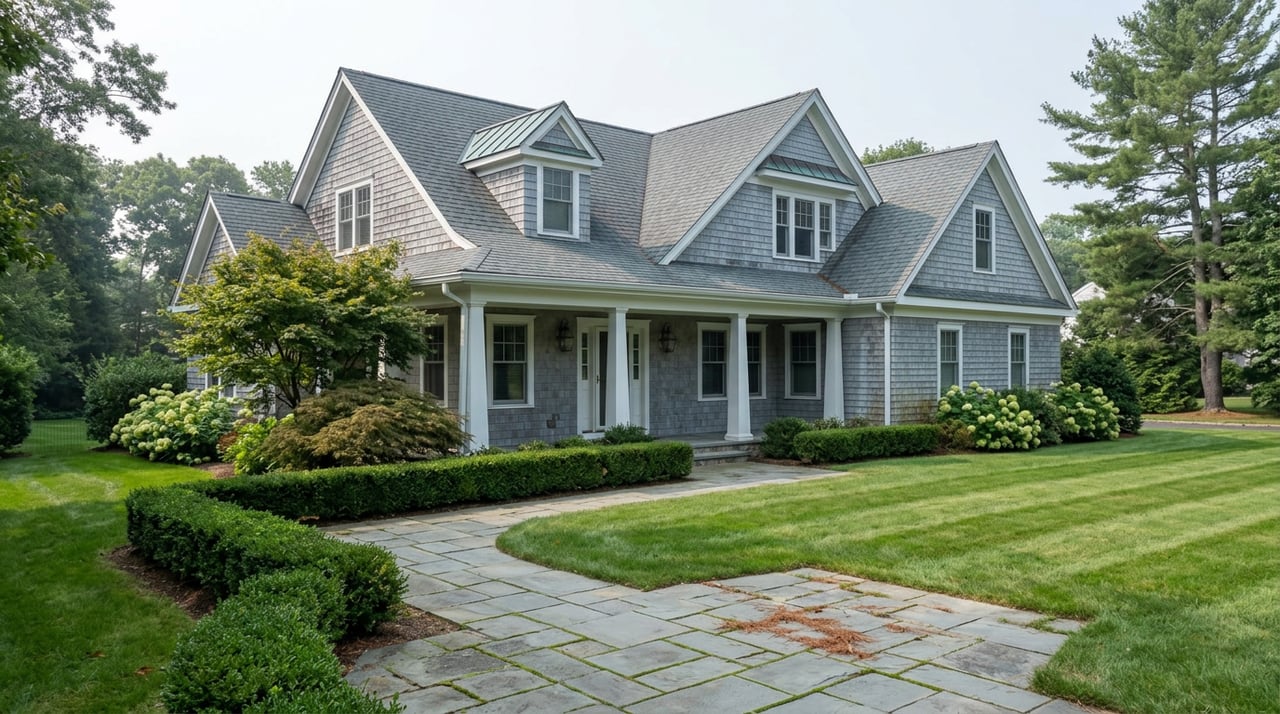
Picture two showings happening the same weekend this month. The first is a shingle-style colonial in Long Lots, four bedrooms, an easy walk to Long Lots Elementary, listed at $1.9 million. By Monday it's under contract, above ask, after a single open house drew a line of strollers and car seats. The second is a waterfront property off Hillspoint Road in Compo Beach, roughly twice the price and twice the square footage. It's still sitting there six weeks later. Not because it's priced wrong. Because there are fewer people in Fairfield County who write checks that size, and fewer still who are ready to write one this quarter.
That gap between a house that moves like clockwork and a house that sells on its own timeline isn't a fluke of one buyer's mood. It shows up consistently in this year's sales data, and it points to something that runs backward from what most buyers assume when they compare Westport's neighborhoods: the highest price per square foot in town does not belong to the neighborhood that sells fastest. It belongs to the one that sells slowest.
The Town-Wide Numbers Set the Stage
As of July 2026, Westport's single-family market has been busy by any measure. Homes closed across a wide range, from $1.2 million up to just under $9 million, with roughly 3.6 months of supply at month's end, a sign of a market that still clearly favors sellers. Homes were moving from list to contract in under 30 days, and the typical closing landed 5 to 6 percent over asking price.
Look at the opening months of 2026 and the single-family segment has strengthened on nearly every measure that counts: closings up 16.3 percent, total dollar volume up 46.4 percent, and price per square foot up 21 percent year over year to $684. The one number that barely budged was the median sale price, which dipped just 0.7 percent. That's not a sign of a cooling market. It's a composition story. The $5 million-plus segment jumped from a single closing a year earlier to eight closings in these opening months of 2026, which pulls the average sale price up sharply while the median, which only tracks the middle transaction, stays put. A town-wide median in Westport right now measures the mix of what happened to sell, not the direction the market is actually moving.
That's the first lesson: don't read the headline median as a temperature check. The second lesson, and the more useful one if you're comparing where to buy, is that the same distortion happens at the neighborhood level, and it cuts the opposite direction from what most buyers expect.
The Number That Doesn't Match the Price Tag
Westport runs on a single ZIP code, 06880, but it behaves like several distinct markets stitched together under one mailing address. Break the same early-2026 single-family sales down by neighborhood and the pattern looks like this:
| Neighborhood | Sale-to-list ratio | Odds of selling | What it signals |
|---|---|---|---|
| In-Town | 107.1% | 87.1% | The hottest pocket in town. Homes routinely close above asking. |
| Long Lots | 103.3% | 88.7% (48 closings, the highest volume in town) | The most liquid neighborhood. More homes changed hands here than anywhere else. |
| Compo Beach | Commands the highest price per square foot in Westport, $848 | 72.3% | The priciest address in town is also the hardest one to convert into a closed sale. |
| Greens Farms / Saugatuck | Near 100% | Longer average days on market | More room to negotiate, and more patience required on both sides. |
Look at that table long enough and the pattern flips your intuition. Long Lots, a neighborhood of larger inland lots without direct water access, has the highest odds of actually closing. In-Town, walkable to the train and the shops along Main Street, sells at the steepest premium over asking. Compo Beach, the neighborhood with the highest dollar figure attached to every square foot, has the lowest odds of selling of the four. Paying the most doesn't buy you the fastest exit. It buys you the smallest pool of buyers who can meet you there.
Why the Buyer Pool Thins at the Top
The mechanism isn't mysterious once you separate who's actually shopping in each price band. A buyer touring Long Lots or In-Town is usually financing with a mortgage, watching a rate lock, and often working against a school calendar or an expiring lease. When a well-priced, well-presented home hits the market in that band, that buyer moves fast, because waiting has a real cost. That urgency is exactly what shows up as a 107.1 percent sale-to-list ratio in In-Town and 48 closings in Long Lots. Plenty of buyers, plenty of competition, short decision windows.
A buyer shopping Compo Beach at $848 a square foot is playing a different game. Many of these purchases are cash or jumbo-financed, and the buyer isn't just weighing this house against the one down Hillspoint Road. They're weighing it against waterfront in Darien, in Greenwich, sometimes against a property outside Connecticut entirely. That buyer has more optionality and less urgency, which is precisely why liquidity thins out as the price climbs past the multimillion-dollar mark. The same forces that pushed Westport's $5 million-plus segment from one closing a year earlier to eight closings in the opening months of 2026 also explain why those closings, once they happen, tend to take longer to get there. More buyers at that level are willing to walk away and come back later. Fewer of them need to act this month.
Saugatuck Is Absorbing Two Kinds of Supply at Once
Saugatuck is worth a closer look because it's dealing with more than the usual seasonal patience the sale-to-list data suggests. On the for-sale side, single-family homes here are trading near full asking price but taking longer to get under contract, the same pattern showing up in Greens Farms. At the same time, the neighborhood is about to absorb a very different kind of supply: The Villages at Saugatuck, a 157-unit apartment community on Hiawatha Lane, developed by Spinnaker Real Estate Partners and Summit Development, with first move-ins tentatively set for next month.
The project has a real backstory. Forty-eight of its units are designated affordable under Connecticut's 8-30g statute, and another 30 are tied to the state's Build for CT financing program, aimed at renters who earn too much for traditional affordable housing but too little to comfortably afford market rents in a town where the typical single-family home now trades well above $2 million. A neighborhood group called Save Old Saugatuck sued to block the development, and the case eventually reached the Connecticut Supreme Court before the project prevailed. The developer has framed the project's infrastructure upgrades, new gas, sewer, water, and underground electrical lines, as a net improvement to the surrounding streets.
This new supply won't compete directly with single-family listings, it's rental housing, not homes for sale. But it lands squarely in the one Westport neighborhood where the for-sale market is already the most patient of the bunch. For a seller weighing Saugatuck against Long Lots or In-Town, or a buyer wondering why homes here sit a little longer even at a fair price, that context matters. The neighborhood is absorbing change on two fronts at once this year.
What This Means If You're Comparing Neighborhoods
The town-wide median tells you almost nothing useful once you're choosing between specific streets. What actually predicts your experience is the odds-of-selling figure for the price band and neighborhood you're in, not the number attached to Westport as a whole.
- If certainty and speed matter most to you, whether you're buying and don't want to lose a bidding war or selling and want a clean, fast close, Long Lots and In-Town are where the data says the process moves fastest and most predictably.
- If you're set on water access in Compo Beach, plan for a longer runway on either side of the transaction. A strong price is still achievable, but the buyer pool that can meet it is smaller and slower to commit, so patience is part of the cost of admission.
- If you're looking in Saugatuck or Greens Farms, expect more room to negotiate and a longer timeline, and factor in that Saugatuck specifically has new rental supply landing in the same footprint this fall.
None of this means one neighborhood is a better investment than another. It means the question "how is the Westport market doing" doesn't have one answer this year. It has at least four, and they don't move together.
If you're weighing a purchase or a sale in any of these pockets and want a read on how your specific street and price band is actually performing right now, not the town-wide average, The Leslie Clarke Team has spent decades inside these exact streets. Reach out and request a home valuation grounded in what's actually happening on your block, not just what the headline number says about Westport as a whole.